


The global peptide therapeutics market was estimated at a whopping $117B in 2024 and is continuing to grow. The leading edge of that market is driven by popular peptides in use by biohackers and longevity enthusiasts that range from the off-label use of GLP-1 agonists for Alzheimer’s prevention, to the newly FDA-approved mitochondrial therapeutic SS-31 (elamipretide), to popular grey market biohacker compounds like BPC-157 and Cerebrolysin.
Eventually some of these peptides will be proven to be effective and safe by the US FDA for cognitive enhancement and dementia prevention and will become part of everyday household use for Americans.
Here I review what we know about them now.
My Take
I personally err on the side of caution for myself given that I am relatively young and doing pretty well with my cognition and brain aging. The only peptide that I take amongst these is a microdose of a GLP1-RA (0.5mg of Semaglutide). This is because of its FDA approval and 10+ year safety profile as well as multiple proven benefits for metabolism and cardiovascular risk with speculative/accumulating evidence for dementia prevention. No other peptide meets my own criteria for risk/benefit tradeoff.
Other people may make different choices according to their risk tolerance and need for quicker solutions to stave off or treat cognitive decline/dementia.
The Risks
Translation Gap: From Mice to Humans
A persistent challenge across peptide research is the failure of dramatic rodent results to replicate in humans with only 1.5% of positive mouse studies translating to FDA approved therapeutics. That rate is even worse for brain therapeutics with many failing not just for efficacy but also for safety (>20% of trials). Compounds showing 10-fold improvements in maze learning or complete reversal of cognitive deficits in mice consistently fail to demonstrate meaningful clinical benefit. The reasons are multifaceted: rodent models of neurodegeneration imperfectly recapitulate human disease; most preclinical studies use young adult animals rather than aged subjects with accumulated pathology; and the pharmacokinetics of peptide delivery to the brain differ substantially between species. Dihexa’s trajectory—from claims of being “seven orders of magnitude more potent than BDNF” in rodents to a failed Phase 2/3 trial and retracted foundational research—exemplifies this “valley of death.” This pattern demands particular caution when extrapolating from compelling animal data to expectations for human cognitive benefit.
Purity, Source, and Drug-Drug Interactions
Risks also include those related to purity and source in grey market-obtained peptides. The hospitalization/near fatal incidents of two attendees who were given peptides at RAADFEST (Revolution Against Aging and Death Festival), a longevity biohacker conference in Vegas, exemplifies those additional risks. Those two individuals were notably taking multiple peptides at once. Combining multiple peptides together represents additional risks from unknown/untested drug-drug interactions.
Evidence at a Glance
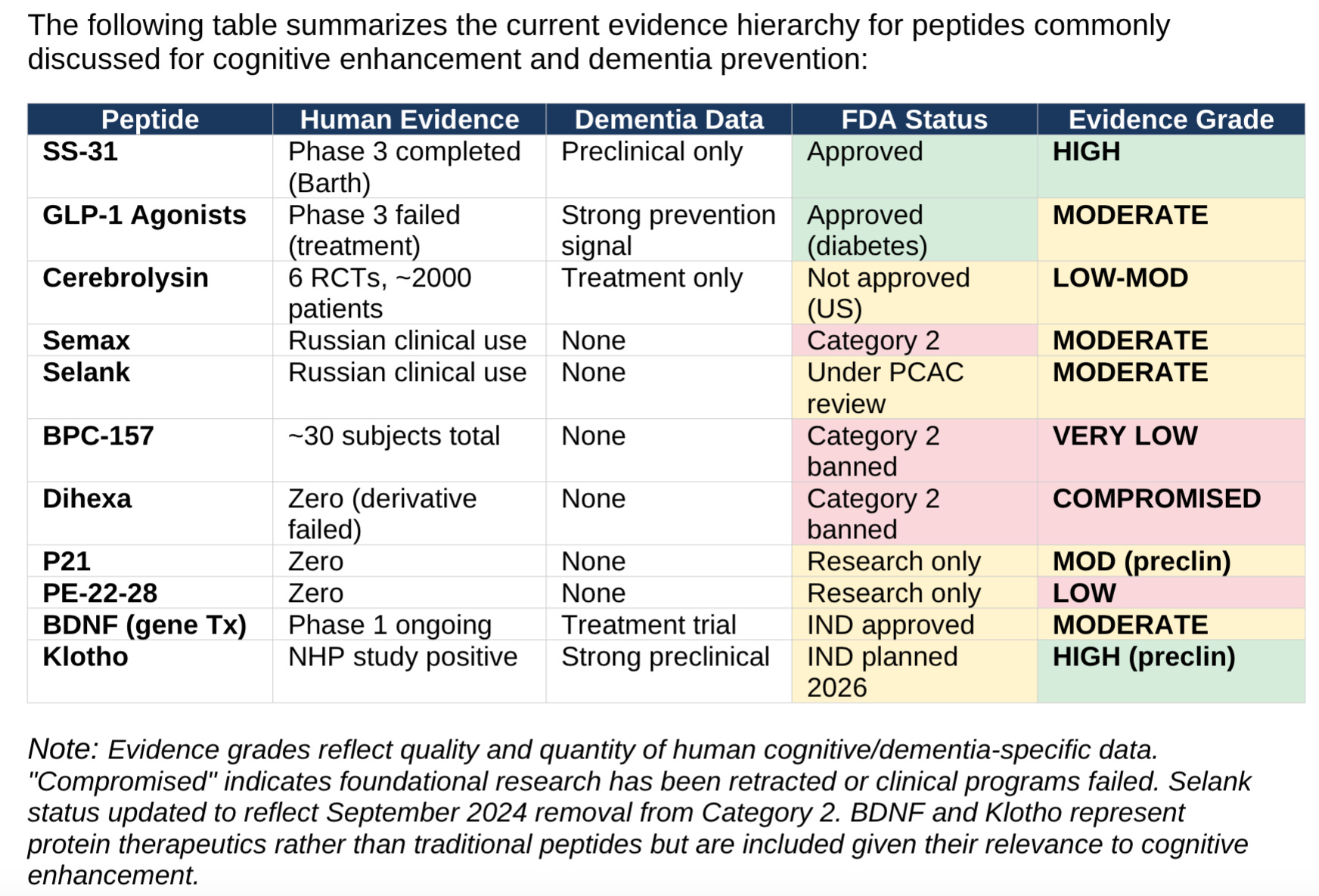
Key Takehome
No peptide has demonstrated efficacy for dementia prevention in humans. However, the story is nuanced—the failure of the EVOKE trials testing oral Semaglutide in symptomatic Alzheimer’s Disease does not invalidate the strong epidemiological signal for GLP-1 agonists in dementia prevention, and SS-31’s approval establishes important regulatory precedent for mitochondrial-targeted therapeutics.
For those focused on early prediction and prevention, these findings reinforce a critical message: interventions must begin in preclinical stages where biological pathways remain modifiable. The gap between biohacker enthusiasm and clinical evidence remains vast, but specific compounds merit continued attention for prevention-focused research.
SS-31 (Elamipretide): The First FDA-Approved Mitochondrial Therapeutic
In September 2025, the FDA granted accelerated approval to Forzinity (elamipretide), marking a watershed moment in mitochondrial medicine. This approval represents the first FDA-approved drug specifically targeting mitochondrial function, establishing regulatory precedent for the mitochondrial dysfunction pathway in aging and neurodegeneration.
Mechanism of Action
SS-31 is a mitochondria-targeted tetrapeptide co-discovered by Dr. Peter Schiller (IRCM) and Dr. Hazel Szeto (Cornell).
We had the great privilege of having Dr. Szeto speak at the Longevity Summit this year. She is a delightful human and wonderful storyteller. She is is taking SS-31 herself and working on additional anti-aging peptides at her new company, the Social Profit Network.
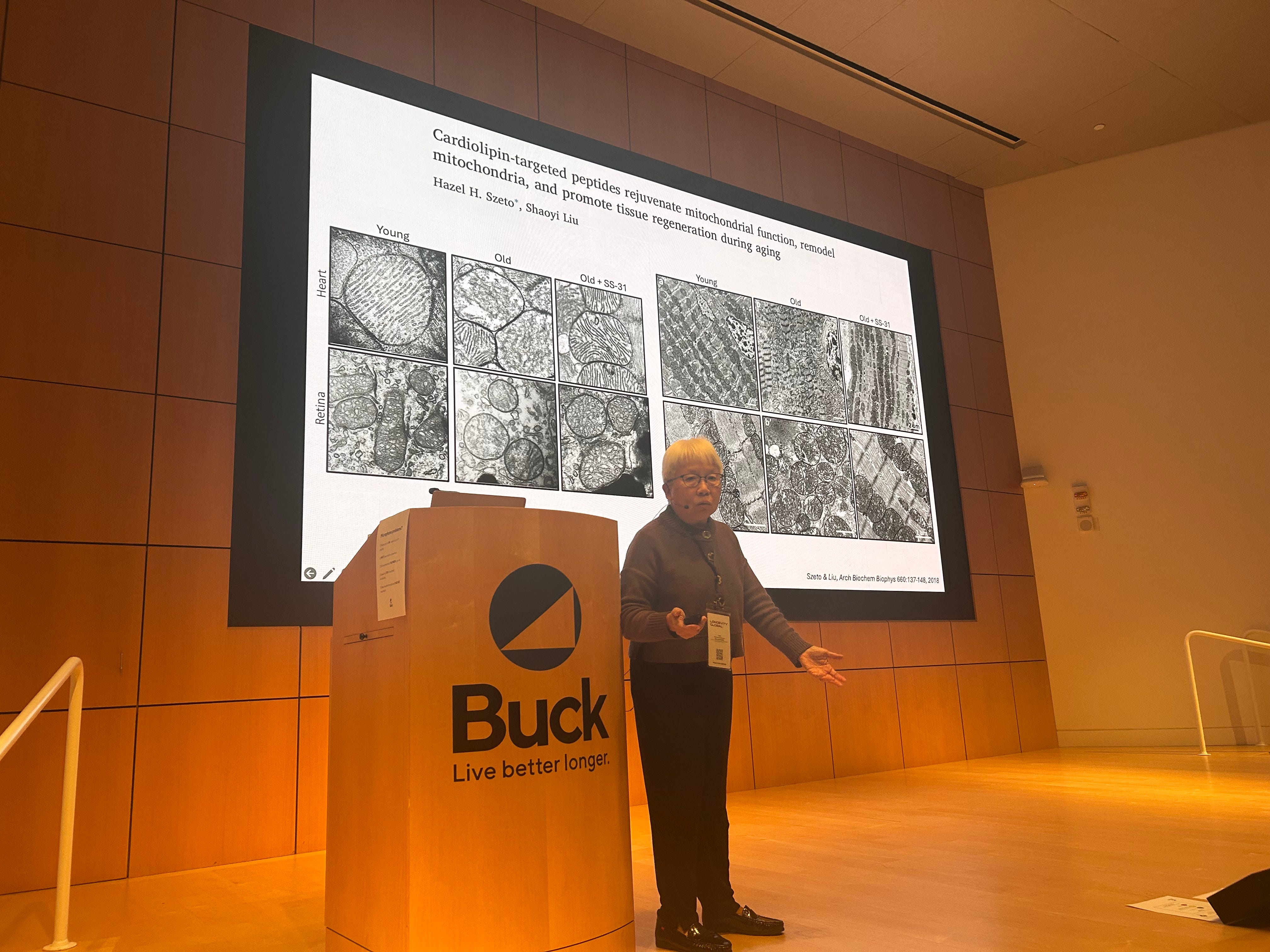
Unlike antioxidants that scavenge reactive oxygen species after formation, SS-31 selectively binds to cardiolipin, a phospholipid essential for mitochondrial inner membrane structure and electron transport chain function. By stabilizing cardiolipin, SS-31 prevents electron leakage at its source, improving ATP generation while reducing oxidative stress. The foundational mechanism work was published by Szeto (2014) in British Journal of Pharmacology.
Approval and Indication
The FDA approved elamipretide to improve muscle strength in patients with Barth syndrome weighing at least 30 kg. Barth syndrome is a rare, life-threatening mitochondrial cardioskeletal disease affecting approximately 150 individuals in the United States. The approval was based on the TAZPOWER clinical trial (NCT03098797), which demonstrated improved knee extensor muscle strength during open-label treatment over 168 weeks. Long-term results were published in Genetics in Medicine (2024).
Neurological Relevance
Preclinical evidence suggests broader neuroprotective potential:
In traumatic brain injury models, SS-31 reduced mitochondrial swelling, neuronal loss, and neuroinflammation
Aged mice treated with SS-31 showed significantly improved exercise tolerance, muscle strength, and mitochondrial efficiency
Studies demonstrate protection against ischemic injury and enhanced cardiac output
Phase 3 trials are ongoing for dry age-related macular degeneration and primary mitochondrial myopathy (Stealth BioTherapeutics pipeline)
Implications for Brain Aging
Mitochondrial dysfunction is a hallmark of brain aging and neurodegeneration. SS-31’s FDA approval opens the door for rigorous investigation of mitochondrial-targeted therapeutics in cognitive decline. For APOE4 carriers specifically—who show accelerated mitochondrial dysfunction—this pathway represents a mechanistically rational intervention target.
GLP-1 Agonists: Treatment Failure Does Not Preclude Prevention
The November 2025 announcement from Novo Nordisk that oral semaglutide failed to slow Alzheimer’s progression in the EVOKE and EVOKE+ trials was widely reported as a setback. However, a careful analysis reveals why GLP-1 agonists may still hold significant promise for dementia prevention—a fundamentally different proposition than treatment.
The EVOKE Trial Results
The EVOKE (NCT04777396) and EVOKE+ (NCT04777409) trials enrolled 3,808 adults aged 55-85 with mild cognitive impairment or mild dementia due to Alzheimer’s disease. The trial design was published in Alzheimer’s Research & Therapy (2025). Participants received daily oral semaglutide (up to 14 mg) or placebo for 104 weeks. The primary endpoint—change in Clinical Dementia Rating Sum of Boxes (CDR-SB)—showed no significant difference between groups. Time to progression to dementia was also unaffected.
Why This Failure May Not Apply to Prevention
1. The Epidemiological Signal Points to Prevention, Not Treatment
Real-world data from over 1 million patients with type 2 diabetes consistently shows that semaglutide users have 40-70% lower risk of first-time Alzheimer’s diagnosis compared to other diabetes medications. This signal suggests influence on early pathogenic processes rather than established neurodegeneration. As Imperial College London’s Ivan Koychev noted: “People exposed to GLP-1RAs over many years appear to have a lower risk of ever developing dementia, which suggests an influence on the earliest pathogenic processes rather than on established neurodegeneration.”
2. Brain Penetration Issues May Have Limited Efficacy
Critical pharmacokinetic data suggests oral semaglutide may not adequately reach key brain regions. Research shows that among commercially available GLP-1 agonists, brain parenchyma penetration is highest for dulaglutide (61.8%), while semaglutide and liraglutide show virtually zero direct blood-brain barrier crossing. The fatty-acid structure surrounding semaglutide may prevent penetration to the hippocampus—the primary target for memory-related intervention. This raises the question: would different GLP-1 formulations or compounds with better CNS penetration show benefit?
3. The Trial Enrolled Patients Too Late in Disease Course
As Dr. Matt Kaeberlein (UW Medicine, Optispan) observed: “Expecting a single drug to meaningfully alter the course of Alzheimer’s once cognitive decline is underway is an extraordinarily high bar.” The EVOKE population already had MCI or mild dementia—meaning pathological cascades were well-established. Prevention trials targeting preclinical or presymptomatic individuals may yield different results.
4. Biomarker Effects Were Present
Despite clinical failure, semaglutide showed biological activity: CSF biomarkers including pTau181, pTau217, and others demonstrated nominally significant reductions of approximately 10% in treated patients. This suggests the drug was engaging relevant pathways, just not sufficiently to translate to clinical benefit at this disease stage. The Alzheimer’s Drug Discovery Foundation noted: “Novo has noted an improvement of Alzheimer-related biomarkers in both trials. We look forward to seeing further results as this may suggest a path forward for semaglutide as part of a combination therapy approach.”
5. Liraglutide (Injectable) Shows More Promise
The ELAD Phase 2b trial of injectable liraglutide in mild Alzheimer’s disease showed more encouraging signals: brain volume loss in memory-related regions was reduced by nearly 50% compared to placebo over one year. Cognitive decline was reduced by 18%. While the primary endpoint (cerebral glucose metabolism) was not met, these findings suggest injectable GLP-1s may be more effective than oral formulations.
BPC-157: The ‘Wolverine Peptide’ Phenomenon
BPC-157 (Body Protection Compound-157) has become the most popular peptide in biohacking communities, yet its scientific foundation for cognitive enhancement remains remarkably thin. Understanding its history and the factors driving its popularity provides important context for evaluating claims.
Origin and Discovery
BPC-157 is a synthetic pentadecapeptide first described by Dr. Predrag Sikiric and colleagues at the University of Zagreb, Croatia in 1993. The peptide was isolated from human gastric juice and identified as a fragment with remarkable stability in acidic conditions—a property that distinguishes it from most peptides.
Over three decades, the Sikiric group has published extensively on BPC-157, with over 130 references in the 2024 comprehensive review alone. The peptide’s proposed mechanism involves activation of the VEGFR2 pathway (promoting angiogenesis), nitric oxide synthesis via the Akt-eNOS axis, and modulation of the dopaminergic system.
The Factors Behind Viral Popularity
Several converging factors transformed BPC-157 from obscure research compound to biohacker phenomenon:
High-Profile Endorsements: Joe Rogan’s statement that his persistent elbow tendonitis was “gone in two weeks” after starting BPC-157 reached millions of podcast listeners. Andrew Huberman’s report that L5 compression pain “disappeared after just two injections” added scientific-adjacent credibility. These testimonials created a cascade of interest.
The “Wolverine” Nickname: Research showing BPC-157 upregulates growth hormone receptors by up to sevenfold in three days led to marketing as the “Wolverine peptide,” suggesting near-superhuman regenerative properties.
Oral Bioavailability: Unlike most peptides requiring injection, BPC-157’s stability in gastric juice allows oral administration, dramatically lowering the barrier to self-experimentation.
Broad Preclinical Data: Extensive animal studies demonstrating effects on tendon healing, muscle repair, gut protection, and neuroprotection provided a scientific veneer to marketing claims.
Community Validation: Reddit communities with 100,000+ subscribers share anecdotes, creating an echo chamber of positive reports that substitute for controlled evidence.
The Evidence Gap
Despite this popularity, human evidence remains extraordinarily limited. A 2025 narrative review in Current Reviews in Musculoskeletal Medicine identified only three published human studies: Lee & Padgett (2021) on knee pain (n=16), Lee et al. (2024) on interstitial cystitis (n=12), and Lee & Burgess (2025) on IV safety (n=2). None examined cognitive endpoints. Total published human subjects across all BPC-157 studies: approximately 30 individuals.
As Dr. Eric Topol noted: “None of them are proven. None of them have gone through what would be considered adequate clinical trials, but nonetheless many people are taking these. It’s actually quite extraordinary.”
Regulatory Status
The FDA classified BPC-157 as Category 2 in 2023, meaning it cannot be compounded by commercial pharmacies and presents “significant safety risks.” WADA added it to the prohibited substances list in 2022. Tailor Made Compounding LLC pled guilty to distributing BPC-157 and forfeited $1.79 million. Despite this, gray market availability continues. The U.S. military OPSS also warns service members against BPC-157 use.
Cognitive Claims Assessment
Claims that BPC-157 upregulates BDNF—a key neurotrophic factor—are not strongly supported in peer-reviewed literature. While the peptide demonstrates neuroprotective effects in animal models of ischemia and Parkinson’s disease (protecting dopaminergic neurons), no human cognitive data exists.
Other Peptides of Interest
Cerebrolysin: The Most-Studied Cognitive Peptide—Yet Not FDA-Approved
Cerebrolysin presents a regulatory paradox: it has more clinical trial data than any other cognitive peptide, is approved in over 50 countries, has been used clinically for decades—yet remains unavailable in the United States. Understanding why illuminates the gap between international and FDA regulatory standards.
What It Is
Cerebrolysin is a mixture of enzymatically-treated peptides derived from porcine (pig) brain tissue, manufactured by Ever Neuro Pharma (Austria). Its constituents include fragments of brain-derived neurotrophic factor (BDNF), nerve growth factor (NGF), glial cell line-derived neurotrophic factor (GDNF), and ciliary neurotrophic factor (CNTF). The low molecular weight peptides (~10 kDa) can cross the blood-brain barrier, theoretically delivering neurotrophic support directly to neurons. It is administered intravenously, typically 30 mL/day diluted in saline for 4-week treatment cycles.
Clinical Evidence: Stronger Than Most, But Inconsistent
A 2015 meta-analysis by Gauthier et al. pooled six randomized, double-blind, placebo-controlled trials in mild-to-moderate Alzheimer’s disease. Results showed Cerebrolysin was significantly more effective than placebo for cognitive function at 4 weeks (SMD -0.40, p=0.003), global clinical change at both 4 weeks (OR 3.32, p=0.02) and 6 months (OR 4.98, p=0.015), and combined “global benefit” (cognitive + clinical) at both timepoints. These effect sizes are comparable to or better than approved cholinesterase inhibitors, which admittedly don’t work that well.
For vascular dementia, a 2013 Cochrane review of six RCTs (597 participants) found beneficial effects on cognitive function (MMSE improvement WMD 1.10) and global function (response rate RR 2.71). However, the review rated the overall evidence quality as “very low” due to small sample sizes, short follow-up periods, high risk of bias, and predominantly manufacturer-funded studies. A 2021 review in Medicinal Research Reviews summarizing 30 years of clinical use concluded Cerebrolysin is “safe and efficacious” and may enhance the effects of cholinergic drugs.
The CASTA Failure: The 2012 CASTA trial—a large, multicenter, double-blind study of Cerebrolysin for acute ischemic stroke in Asia (n=1,070)—failed to meet its primary endpoint, showing no significant benefit over placebo. This high-profile negative result cast doubt on Cerebrolysin’s efficacy for stroke, though subgroup analyses suggested possible benefit in severe cases. A 2023 Cochrane review confirmed no clear benefit for stroke and noted increased adverse events requiring hospitalization in the Cerebrolysin group.
Where It’s Approved—And Why Not in the US
Cerebrolysin is approved for treating stroke, traumatic brain injury, and/or dementia in Austria, Germany, Russia, China, South Korea, and approximately 50 other countries across Europe and Asia. The reasons for its absence from the US market are multifactorial:
No FDA Application Filed: Ever Neuro Pharma, the Austrian manufacturer, has not pursued FDA approval. The FDA does not proactively approve drugs—companies must submit New Drug Applications with Phase 1-3 trial data meeting FDA standards. Without a sponsor willing to invest in US trials, approval cannot occur.
Inconsistent Trial Results: While dementia trials show benefit, the CASTA stroke trial failure and Cochrane’s “very low quality” evidence rating raise questions about reproducibility. FDA requires consistent, high-quality evidence.
Manufacturer-Funded Studies: Nearly all published trials were funded by Ever Neuro Pharma, raising concerns about publication bias. Independent replication is limited.
Complex Composition: As a biological mixture rather than a single molecule, Cerebrolysin’s composition can vary between batches. FDA requires precise characterization of drug products—difficult for complex peptide mixtures derived from animal tissue.
Commercial Considerations: The US FDA approval process costs hundreds of millions of dollars. Without patent protection for a novel molecule, the commercial return may not justify the investment for a European manufacturer with an established international market.
Safety Profile
Across clinical trials, Cerebrolysin appears generally safe for short-term use (up to 3 years studied). Common adverse events include headache, dizziness, and injection site reactions. The ADDF’s comprehensive Cerebrolysin report notes “studies suggest cerebrolysin is generally safe.” However, the 2023 stroke Cochrane review flagged a higher rate of spontaneous adverse events requiring hospitalization in Cerebrolysin-treated patients, warranting caution. Contraindications include epilepsy, severe renal impairment, and hypersensitivity to porcine proteins.
Availability and Practical Considerations
Cerebrolysin requires IV administration and is not available through US pharmacies or compounding pharmacies. Some patients obtain it through medical tourism (clinics in Mexico, Europe, or Asia) or grey market importation. Oral formulations sometimes marketed online are likely ineffective—peptides are degraded in the gastrointestinal tract. For those considering Cerebrolysin, key limitations include: no prevention trials have been conducted (all studies in existing disease), optimal dosing remains uncertain (higher doses may actually be less effective), batch-to-batch variability in peptide content, and the inconvenience of repeated IV infusion cycles.
Semax and Selank: Russian Nootropics with Decades of Clinical Use
Semax and Selank are synthetic peptides developed at the Institute of Molecular Genetics of the Russian Academy of Sciences. Both have been approved for clinical use in Russia since the 1990s—Semax for stroke recovery, memory enhancement, and cognitive disorders; Selank for anxiety and neurasthenia. They represent a rare case of peptides with decades of clinical experience, albeit outside Western regulatory frameworks.
Mechanism of Action
Semax is a synthetic heptapeptide analog of ACTH, a hormone. It does not exhibit the hormonal effects of ACTH but demonstrates neurotrophic activity. Research shows Semax increases BDNF protein levels 1.4-fold in rat hippocampus, promoting neuroplasticity through the same pathway targeted by exercise and antidepressants. Additional proposed mechanisms include modulation of dopaminergic and serotonergic neurotransmission.
Selank is a synthetic analog of the endogenous tetrapeptide, tuftsin, with anti-anxiety properties. As described in Volkova et al. (2016) in Frontiers in Pharmacology, Selank modulates GABA-A receptor function similarly to benzodiazepines—but critically, without causing sedation, tolerance, or physical dependence. This “clean” anti-anxiety profile makes it particularly interesting for long-term use.
Both peptides are administered intranasally at doses of 300-900 μg/day, bypassing first-pass metabolism and potentially achieving direct brain delivery through the nose.
Clinical Evidence
Russian clinical studies report benefits for stroke recovery, cognitive enhancement, and anxiety disorders. However, the Alzheimer’s Drug Discovery Foundation notes that “published literature of well-conducted studies is lacking” by Western standards. No large randomized controlled trials meeting FDA evidentiary requirements have been published for either compound. Reported side effects are minimal—primarily mild nasal irritation with intranasal administration.
FDA Regulatory Classification
The FDA’s Category 2 classification for Semax has generated confusion. It is essential to understand that this designation reflects absence of FDA-standard evidence, not documented evidence of harm. The FDA’s stated concerns are: (1) theoretical risk of allergic reactions with repeated peptide administration, (2) quality control concerns about compounding purity and consistency, and (3) no Phase 1-3 trials conducted under FDA oversight. The ADDF explicitly states: “Little human evidence exists for potential side effects.”
Notably, Selank was removed from Category 2 in September 2024 when nominators withdrew the substance. It is now scheduled for review by the Pharmacy Compounding Advisory Committee (PCAC), suggesting the regulatory landscape remains fluid.
Dihexa: A Cautionary Tale
Dihexa exemplifies the gap between preclinical hype and clinical reality. This angiotensin IV derivative was marketed as “seven orders of magnitude more potent than BDNF” based on rodent studies. However, the foundational mechanism paper (Benoist et al., 2014 in J Pharmacol Exp Ther) establishing Dihexa’s HGF/c-Met pathway activation was formally retracted in April 2025 after being flagged since 2021.
The retraction notice states : “Following an investigation by Washington State University, Figures 1B, 2A/C, and data in the subsequent erratum submission for the article have been found to contain falsified and/or fabricated data and Leen H. Kawas and Joseph W. Harding were found to be solely responsible. The Journal of Pharmacology and Experimental Therapeutics has retracted this article.”
In September 2024, Athira Pharma’s LIFT-AD trial of fosgonimeton—a clinical derivative of Dihexa—failed to meet primary and secondary endpoints in 312 mild-to-moderate Alzheimer’s patients. The HGF/c-Met pathway that Dihexa activates is also a known pro-cancer pathway, raising unresolved safety concerns. Dihexa remains available only through gray market sources with no validated dosing protocols.
P21 and PE-22-28: Strong Preclinical, Zero Human Data
These peptides represent the most compelling preclinical candidates without human cognitive data. P21, a Cilliary Neurotrophic Factor (CNTF)-derived tetrapeptide from Dr. Khalid Iqbal’s group at the New York State Institute for Basic Research, crosses the blood-brain barrier, stimulates neurogenesis, and outperformed Cerebrolysin in comparative animal studies (Bolognin et al., 2012 in Acta Neuropathologica). Critically, it does not cause CNTF’s side effects (anorexia, muscle loss).
PE-22-28 (Mini-Spadin) blocks TREK-1 potassium channels with ~100-fold greater potency than its parent compound, demonstrating BDNF upregulation, rapid neurogenesis within 4 days, and cognitive benefits in stroke models (Djillani et al., 2017 in Frontiers in Pharmacology). Both peptides are used in biohacker protocols based entirely on extrapolated animal doses—a significant leap given the translation challenges seen with other compounds.
BDNF: The Master Neurotrophin
Brain-Derived Neurotrophic Factor (BDNF) is arguably the most important molecule in cognitive neuroscience—a master regulator of synaptic plasticity, neuronal survival, and cognitive resilience. Many peptides discussed in this report (Semax, P21, PE-22-28) are valued precisely because they upregulate BDNF. However, direct BDNF therapeutics face a fundamental challenge: the protein does not cross the blood-brain barrier.
Availability: BDNF is not available through compounding pharmacies or grey market sources. As a large protein (approximately 27 kDa), it cannot be synthesized by peptide compounding methods and requires either gene therapy delivery or cell-based manufacturing. The only therapeutic approach currently in clinical trials is AAV2-BDNF gene therapy, which requires neurosurgical implantation.
Watch for small molecule approaches coming down the pipeline for BDNF.
A first-in-human Phase I clinical trial at UC San Diego (NCT05040217) is testing AAV2-BDNF gene therapy in 12 patients with early Alzheimer’s disease and MCI. The approach uses adeno-associated virus vectors to deliver the BDNF gene directly into the brain, enabling continuous local production of the protein. Preclinical studies in Alzheimer’s mouse models, aged rats, and aged rhesus monkeys showed BDNF gene therapy prevented neuronal death, stimulated synaptic function, and improved memory. This work was published in Nature Medicine (2009).
A 2025 comprehensive review in IJMS describes emerging delivery strategies including lipid nanoparticle-based mRNA therapies and CRISPR-dCas9 epigenetic editing to overcome BBB obstacles. For those seeking non-invasive BDNF enhancement, the evidence supports high-intensity interval training (HIIT)—12 weeks of HIIT produced 20% increases in hippocampal BDNF and improved cognitive flexibility in older adults—and flavonoid-rich diets containing polyphenols from sources like green tea and dark chocolate.
Testing Levels: Serum BDNF can be measured via commercial ELISA assays. Normal values in healthy adults average approximately 20-35 ng/mL, though significant variability exists between assays. A 2015 Scientific Reports study comparing six commercial kits found inter-assay variations of 5-20%, highlighting the need for consistent methodology when tracking changes over time. Blood should be drawn fasting in the morning, as BDNF levels fluctuate with meals and circadian rhythm. Importantly, serum BDNF reflects platelet release during clotting rather than direct brain levels, so its clinical utility as a biomarker remains debated.
Klotho: The Longevity Factor
Klotho is a transmembrane protein that declines dramatically with aging and has emerged as one of the most compelling therapeutic targets for cognitive enhancement. Unlike peptides that require brain penetration, klotho enhances cognition when administered peripherally—despite not crossing the blood-brain barrier—suggesting it acts through systemic signaling mechanisms that remain incompletely understood.
Availability: Like BDNF, klotho is not available through compounding pharmacies or grey market sources.
*Correction*: since publishing this article, people have pointed me to grey market sources of klotho that are “research grade”. I recommend exercising great caution in pursuing these avenues.
The α-klotho protein is a large (~130 kDa) glycoprotein that requires specialized manufacturing. Current therapeutic development focuses on either recombinant protein formulations (Jocasta Neuroscience’s JN-0413) or mRNA-based approaches to stimulate endogenous production (Klothea Bio). No injectable klotho products are commercially available; any such products would be research-grade materials not intended for human use.
The landmark 2023 Nature Aging study by Castner et al. demonstrated that a single low-dose injection of klotho protein enhanced memory in aged rhesus macaques—the first evidence of cognitive enhancement in non-human primates. Critically, low doses (approximately 5x baseline levels) were effective while high doses were not, suggesting a therapeutic window. Earlier work from Dr. Dena Dubal’s lab at UCSF (Cell Reports, 2017) showed that peripheral klotho fragment administration enhanced cognition and neural resilience in young, aging, and α-synuclein transgenic mice through NMDA receptor-dependent mechanisms.
A May 2025 study in Molecular Therapy from the INc-UAB showed that gene therapy increasing secreted klotho (s-KL) in mice extended lifespan by 15-20% while improving muscle, bone, and cognitive health at 24 months of age (equivalent to ~70 human years).
Testing Levels: Soluble α-klotho can be measured in serum using commercial ELISA kits (e.g., IBL International JP27998). A 2022 reference values study in 346 healthy adults aged 18-85 established normative ranges. Klotho levels decline significantly with age: young adults (18-35) have the highest levels, with progressive decreases through middle age and into older adulthood. Levels are also reduced in chronic kidney disease, making klotho a biomarker of renal function as well as aging. Blood should be collected fasting, centrifuged promptly, and stored at -80°C for optimal stability.
Commercial Development: In August 2025, Jocasta Neuroscience raised $35 million in Series A funding to advance JN-0413, a proprietary α-klotho formulation, through Phase 1 trials with IND submission planned for Q4 2026. Separately, Klothea Bio launched in November 2024 pursuing an mRNA-based approach to enhance endogenous klotho production. A 2025 systematic review and meta-analysis of 12 studies (6,645 participants) confirmed significant correlations between klotho levels and cognitive function, supporting its potential as both biomarker and therapeutic target.
Critical Gaps and Limitations
Across all peptides reviewed, several critical limitations persist:
Zero Dementia Prevention Trials: All existing evidence addresses treatment of existing impairment. No peptide has been studied for prevention in at-risk populations before symptom onset.
Long-Term Safety Unknown: Most studies are under 30 days. The safety of chronic use—which would be required for prevention—is uncharacterized.
Translation Failure Pattern: Dramatic rodent results repeatedly fail to replicate in humans. Dihexa/fosgonimeton is the latest example of this “valley of death” between preclinical promise and clinical reality.
Quality Control Absent: Unregulated products have unknown purity, potency, and sterility. The FDA has cracked down on compounding pharmacies, pushing products to gray markets with even less oversight.
Conclusions and Recommendations
Key messages for at-risk populations:
The EVOKE trial failure does not invalidate GLP-1 agonists for prevention—the epidemiological signal remains strong, and these drugs may provide metabolic and cardiovascular benefits with potential cognitive co-benefits when used for approved indications
SS-31’s approval establishes precedent for mitochondrial-targeted therapeutics—watch this space for expanded indications
Popular biohacker peptides (BPC-157, Dihexa, P21) have essentially no human cognitive evidence; enthusiasm dramatically outpaces science
FDA Category 2 classifications for peptides like Semax reflect absence of FDA-standard evidence, not documented harms—Russian clinical experience suggests reasonable safety, but long-term effects by Western standards remain uncharacterized
Established interventions—exercise, Mediterranean diet, sleep optimization, cardiovascular risk management, cognitive engagement—have far more consistent evidence than any peptide for dementia risk reduction
For Research Prioritization
Compounds meriting continued investigation:
GLP-1 Agonists: Prevention trials in preclinical/presymptomatic populations, testing compounds with better brain penetration (dulaglutide, lixisenatide)
SS-31/Elamipretide: Cognitive outcomes in mitochondrial disease populations, potential expansion to brain aging indications
P21: Phase I human trials to establish safety, pharmacokinetics, and proof-of-mechanism for CNTF-pathway neurogenesis
Klotho: Watch for Phase 1 results from Jocasta Neuroscience (expected 2027-2028); this represents the most advanced program targeting cognitive enhancement through longevity pathways
Combination approaches: GLP-1 agonists combined with anti-amyloid therapies or mitochondrial-targeted agents may address multiple pathological pathways
Thank you for distilling a complex topic into such a thoughtful, evidence-anchored discussion! As clinicians, we often encounter enthusiasm for “quick fixes”, so it’s refreshing to see peptides approached with nuance, recognizing both their biological plausibility and the current limits of the data. From a mechanistic perspective, many of the pathways you highlight (neurotrophic support, mitochondrial function, and synaptic plasticity) are clearly relevant to cognition. At the same time, separating true signal from noise remains essential. Well-designed clinical trials, clearly defined dosing, and long-term safety data are critical before these approaches can be broadly applied. The brain is not easily “optimized,” and interventions that influence metabolic or signaling pathways can have wide-ranging effects that warrant careful study. Clinically, we appreciate the balanced tone here: neither dismissing potential nor overstating the evidence. As patient interest in peptides and nootropics continues to grow, grounded discussions that integrate mechanistic rationale with human data are exactly what help guide responsible decision-making. 🙂
Thank you for writing the anti-hype version of this conversation. The ‘treatment failed’ headline misses the prevention nuance, and the grey market purity problem is the part families never hear until something goes wrong.